Emverity.
Clinical trials for care you need.
Need treatment but worried about the cost? Explore studies for your condition, check whether you may qualify, and compare what the study pays for with what you may still owe. Then bring your matches to your doctor and decide together.
- ✓ Free preliminary matching across the US
- ✓ No out-of-pocket cost for trial-related care—and most studies compensate participants
- ✓ Built to share with your clinician at your next visit
- ✓ You choose whether to share a referral with a study team
How matching works
Free and preliminary — and you decide what happens next.

Tell us about you
Share your age, location, condition and medications. It takes about a minute.

Your answers are checked
An AI service compares your answers with each study's inclusion and exclusion criteria.

See your matches
Get a preliminary list of studies that look like a fit. The study team confirms final eligibility.

You decide
Nothing is shared with a study team until you and your clinician are ready and you give consent.
Pre-screening is not medical advice and does not guarantee eligibility. Bring your matches to your clinician to decide together; study teams make the final decision.
Trials test investigational approaches and may supplement—not replace—your current care. Some use placebo. Eligibility, treatment benefit, coverage and payment are not guaranteed. Do not delay needed care; discuss options with your clinician.
What could a trial cover—and what might I still pay?
Care that starts with a conversation, not a bill.
If treatment isn't covered—or the copays add up to more than you can manage—you still have options. Emverity finds clinical trials you and your doctor can consider together: studies that pay for trial-related care so you owe nothing out of pocket for it, and that in most cases compensate you for participating. Whether a trial fits is a decision you make with your clinician.
See how matching worksClinical trials recruiting now
Live from ClinicalTrials.gov
Studies for Type 2 diabetes. Confirm with your clinician whether a study supplements or replaces any current treatment; costs and coverage are study-specific.
Loading recruiting trials…
Standard care vs. a study
The same condition can look very different on your wallet depending on who pays.

Typical standard care
- ✓ You may owe deductibles, copays and coinsurance
- ✓ Uncovered treatments can add up quickly
- ✓ Costs differ by procedure, provider and location
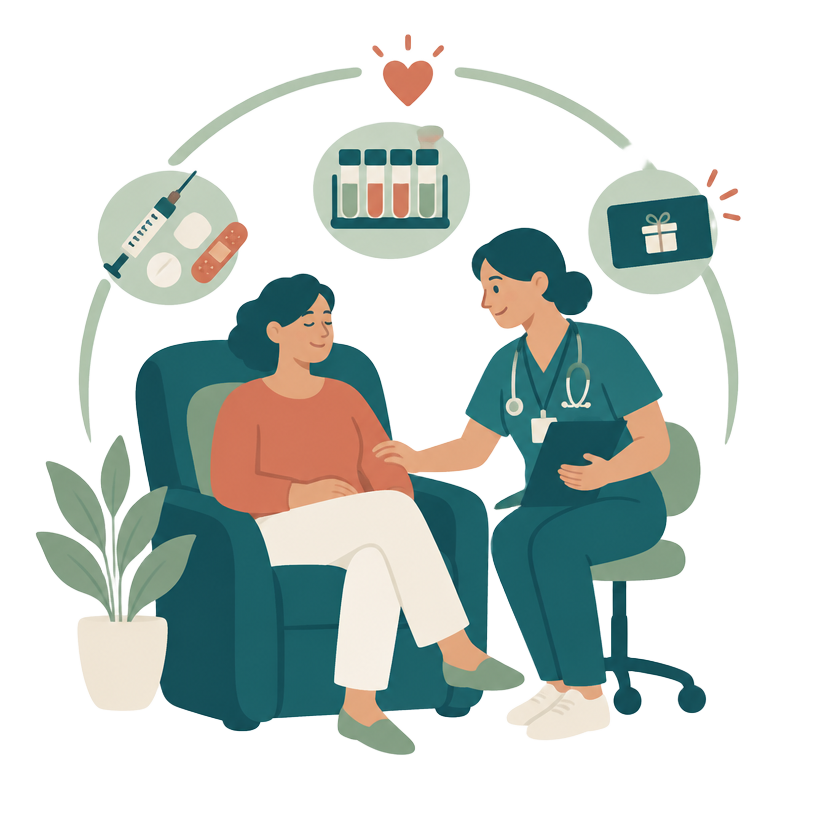
A clinical study
- ✓ Trial-related treatments, tests and procedures: no out-of-pocket cost to you
- ✓ Most studies also pay a participation stipend
- ✓ Stipend amounts vary by study—confirm before joining
- ✓ A decision you make together with your physician
General illustration, not a price quote. Some studies include a placebo group, and routine care may still be billed to insurance. Compare real procedure prices and study details in our cost guide.
See what a trial could cover →Compare procedure prices and see what a trial could save you.
Explore clinically appropriate trial options and measure plan and patient financial impact.
Explore voluntary trial options and potential benefits-cost impact.
Receive consented referrals informed by preliminary criteria matching.